How AI Tools Like Midjourney Are Transforming Visual Content Creation by 2025
Did you know AI is reshaping visual design faster than most creatives can say “artistic block”? Just a few years ago, crafting stunning visuals took hours or even days. Today, cutting-edge AI tools like Midjourney are flipping the script—delivering faster, sharper, and more imaginative content with just a few clicks.
As AI stakes its claim in creative fields, it’s not replacing artists but empowering them, offering a fresh palette of possibilities. Tools such as Midjourney’s latest updates push boundaries in detail and style, helping creators overcome common pain points like tight deadlines and costly revisions.
Imagine boosting your workflow speed while elevating quality—this dual win is just the start. Looking ahead, AI promises even more groundbreaking features that will blur the line between human touch and machine precision.
Curious about how these advancements will redefine visual content creation by 2025? Stick around to uncover the trends, the tech, and the creative revolution on the horizon.
What Current Research Reveals About AI’s Impact on Visual Content
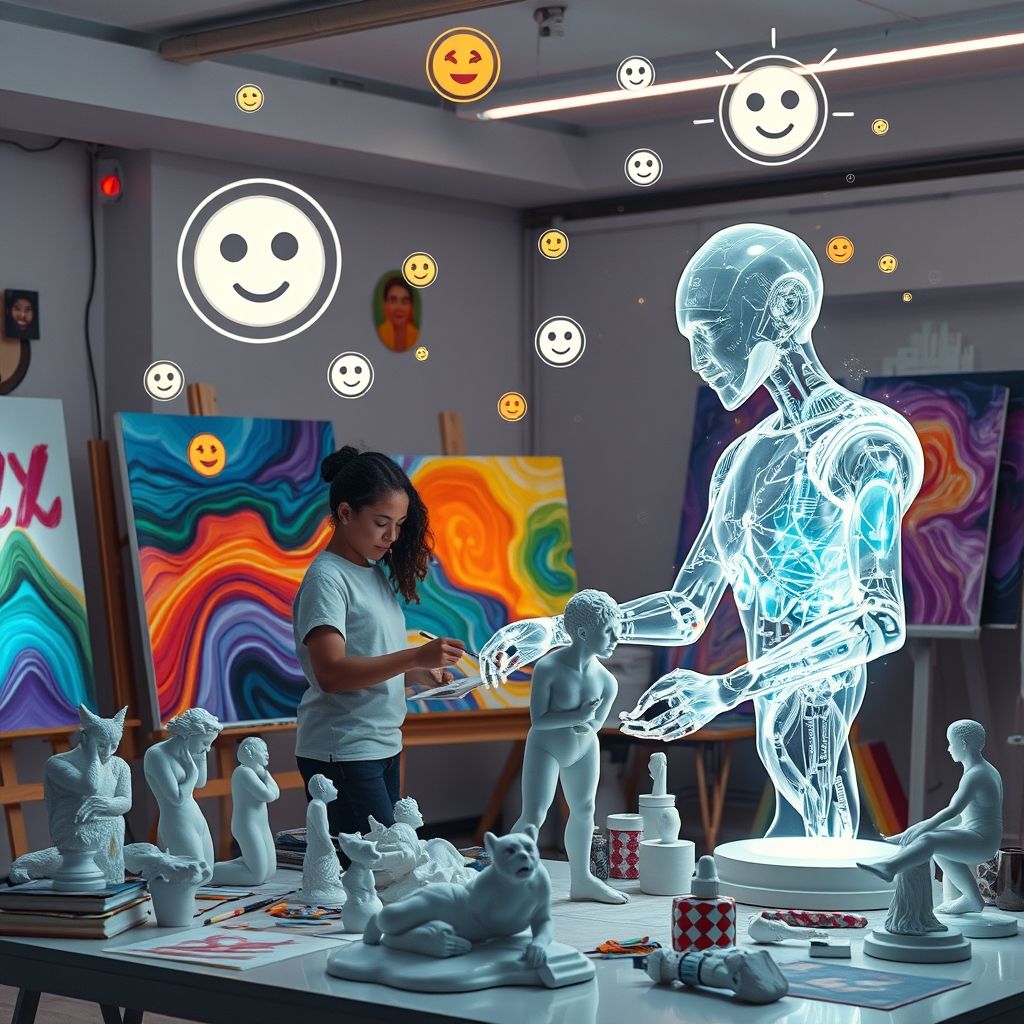
As artificial intelligence continues to evolve, its influence on visual content creation has become a significant research focus. Studies highlight how AI-powered design and editing platforms are reshaping creative workflows by boosting efficiency, expanding creative possibilities, and supporting more personalized content. Tools like Midjourney are at the forefront, driving a profound shift in how visual material is conceptualized, generated, and refined.
Research consistently shows that the integration of generative AI not only accelerates production timelines but also enhances the quality and diversity of outputs. These developments are influencing industries from marketing to entertainment, introducing new standards and expectations for creativity and customization.
AI Design and Editing Platforms Empowering Creators
Popular AI-integrated platforms such as Canva and Adobe Sensei demonstrate how AI embeds itself in everyday creative tasks. Canva’s AI features enable users to generate dynamic layouts and adapt designs based on input themes, simplifying the process for non-designers. Adobe Sensei, by contrast, leverages machine learning to automate complex editing tasks like image tagging, content-aware fills, and style transfers, optimizing workflows for professionals.
These platforms serve as practical examples of AI enhancing user creativity by providing intuitive tools that balance automation with human input, allowing creators to focus more on vision and less on repetitive technical details.
Generative AI Models Like Midjourney and DALL·E in Content Creation
Generative AI models such as Midjourney and DALL·E have revolutionized the initial stages of visual content creation by producing high-quality images from textual prompts. This capability unlocks new creative avenues, enabling rapid iteration and exploration of concepts that might take hours or days manually.
Beyond efficiency, such models diversify the types of visuals available, often blending styles and elements to produce novel artworks that inspire further refinement. This expands the creative toolkit, particularly for marketing campaigns and digital art projects.
Accelerating Workflows and Enhancing Output Quality
Research highlights that AI-driven automation reduces the time spent on mundane tasks such as background removal, color correction, and layout adjustments. By handling these routine operations, AI frees designers to prioritize strategic and high-level creative decisions.
Moreover, AI tools can enhance output quality by applying consistent standards across large volumes of content, reducing human error, and adapting styles based on audience analytics, thereby improving overall engagement and effectiveness.
Personalization and Content Diversity Enabled by AI
AI’s ability to analyze data and generate tailored visuals allows marketers to deliver personalized content at scale. For example, brands can automatically create dozens of image variations optimized for different demographics, platforms, or campaign goals without manual redesign.
This level of customization fosters greater audience connection and reflects modern expectations for diverse and inclusive representation in visual media.
Impact on Marketing Strategies and Digital Workflows
Incorporating AI tools shifts marketing strategies toward more agile, data-driven approaches. With AI, teams can quickly test visual concepts, adapt messaging dynamically, and streamline collaboration across departments.
Digital workflows benefit from integrated AI features that synchronize content creation with analytics and distribution platforms, creating a cohesive ecosystem that responds in real time to audience feedback.
Emerging Trends in Synthetic Data for Enhanced Detection and Accuracy
Synthetic data generated by AI is becoming invaluable for improving the detection capabilities of visual recognition systems. By creating large, labeled datasets with diverse and rare scenarios, synthetic data bolsters model training for applications like content moderation and quality control.
This trend enhances the accuracy and reliability of automated systems managing visual content, contributing to safer and more effective digital environments.
Filling the Gaps: Integrating Multiple AI Tools for Seamless Creativity
As AI-powered visual content creation evolves, harnessing the strengths of multiple tools concurrently becomes critical for maximizing creative output. Platforms like Midjourney have pushed boundaries with rapid advances in image generation, yet creators often find themselves juggling numerous AI applications to complete their projects. This complexity presents challenges but also opens the door to highly efficient, customized workflows—if integration is managed well.
By strategically combining AI platforms, creators can unlock synergies that enhance productivity and broaden artistic possibilities. Understanding how to connect these tools smoothly is essential for both independent creators and diverse teams aiming to scale their content creation efforts without sacrificing quality or originality.
Challenges of Managing Multiple AI Tools
While each AI tool offers unique capabilities, switching between them can be cumbersome and time-consuming. Content creators face obstacles like:
- Fragmented interfaces that disrupt workflow continuity
- Incompatibility of file formats and output standards
- Redundant manual steps slowing project completion
- Difficult coordination among team members using different platforms
These issues can reduce the overall impact of AI integration, underscoring the need for streamlined solutions that allow smooth transitions between AI services such as Midjourney, text-to-image generators, enhancement tools, and video or animation AIs.
Successful Integration Approaches
Creators and companies that have mastered AI tool integration tend to focus on:
- Centralized platforms: Using solutions that aggregate multiple AI services permits content generation, editing, and management in one workspace.
- Automated workflows: Implementing tools that support APIs or scripting to automate handoffs between AI applications reduces manual intervention.
- Standardizing output formats: Ensuring AI outputs adhere to common standards facilitates direct import/export between programs without loss of quality.
- Team collaboration features: Employing cloud-based services that allow real-time sharing and feedback helps diverse teams align across different AI tools.
For example, creators often start a project with Midjourney’s cutting-edge image generation, then pass the results through dedicated enhancement AI for refinement, finally integrating the images into multimedia platforms for further development—each step interconnected via API-driven automation or centralized content hubs.
Tools and APIs Facilitating Interoperability
Several emerging tools support making AI ecosystems more cohesive. Middleware platforms offer API connectors that bridge different AI tools, enabling:
- Seamless data exchange without format conflicts
- Trigger-based automation to advance projects fluidly across tools
- Unified asset repositories accessible across AI applications
This interoperability not only keeps creations consistent but also reduces cognitive load on users, making complex AI toolchains approachable for creators with varying technical skills.
Benefits for Small Businesses and Creative Teams
Integrated AI tool workflows deliver significant advantages beyond individual creators:
- Time savings: Automation and smooth transitions cut turnaround times dramatically.
- Cost efficiency: Reducing redundant tasks and manual corrections optimizes resource use.
- Expanded creative possibilities: Combining diverse AI capabilities enables innovation unattainable with a single tool.
- Inclusiveness: Collaborative platforms empower geographically dispersed and diverse teams to contribute effectively.
For small businesses and creative teams, these benefits translate into the ability to compete at higher levels, generate unique content rapidly, and leverage AI as a force multiplier rather than a fragmented collection of isolated utilities.
Understanding the Human-AI Collaboration in Emotional and Creative Work
As AI tools like Midjourney push the boundaries of what is possible in visual content creation, a critical question arises: how do human creativity and AI’s generative capabilities blend to produce meaningful, emotionally resonant work? This evolving partnership reshapes the creative landscape, encouraging a reflective yet optimistic outlook on the future of artistic collaboration. The interaction between human intuition and AI’s distinctive strengths reveals new potentials for expression while highlighting where the human touch remains irreplaceable.
AI excels in processing vast data, generating novel visuals from complex prompts, and offering rapid iterations that fuel experimentation. Yet, emotional nuance and deep cultural understanding spring from human insight, grounding creations in authentic experience. Together, they create a dynamic feedback loop where AI offers possibilities and humans steer those possibilities toward significance and emotional depth.
Where AI Excels Versus Human Intuition
AI models like Midjourney specialize in speed, diversity, and pattern recognition, often synthesizing visual elements in ways a human might not envision. This capability allows creators to explore a spectrum of ideas quickly, breaking creative blocks and uncovering unexpected aesthetics.
Conversely, human intuition guides the conceptual underpinnings of art — the emotions, values, and narratives that AI lacks direct access to. While AI can mimic styles or generate motifs, it does not possess lived experience or empathy, making human judgment crucial in aligning outputs with intended emotional or cultural resonance.
Examples of Emotional Creativity Enhanced by AI Tools
One compelling example is artists using Midjourney to visualize abstract feelings like nostalgia or anxiety, starting from vague prompts and refining outputs based on mood and symbolism. The AI’s generative suggestions help artists push beyond conventional representations, while human creators interpret and contextualize the imagery to evoke genuine emotional responses.
Similarly, collaborative projects have emerged where writers and visual artists use AI tools to produce immersive, multimedia experiences that blend storytelling with evocative visuals — a synergy that amplifies audience engagement beyond traditional media.
Ethical Considerations in Delegating Creative Decisions to AI
Handing over creative control to AI raises questions about authorship, originality, and accountability. It is vital to consider how much influence AI should have in shaping content and to maintain transparency about AI’s role in the creation process. Ethical dilemmas also surface around biases embedded in training data, which may subtly affect the emotional tone or cultural relevance of AI-generated work.
Creators must remain vigilant in critically evaluating outputs, ensuring that AI complements rather than replaces human creativity, and that final decisions reflect conscious ethical standards aligned with their artistic vision.
Opening New Creative Directions Through Collaboration
The human-AI collaboration expands the creative frontier by merging the predictability of human experience with the unpredictability of AI’s generative power. This partnership encourages experimentation with hybrid aesthetics, forms, and media that neither could achieve alone.
By embracing AI as a creative partner, artists can tap into unexplored visual vocabularies, refine ideas through iterative exchange, and push the boundaries of emotional storytelling, ultimately evolving new genres and practices in visual content creation.
Potential Future Developments in AI-Human Synergy
Looking ahead, AI platforms like Midjourney may advance toward more intuitive understanding of context, emotional cues, and user intent, offering customized collaborations that feel even more seamless and insightful. Integration with virtual reality, augmented reality, and neurofeedback technologies could deepen the sensory and emotional connection between creator, AI, and audience.
Such developments promise a future where AI not only supports but enhances human creativity—providing tools that amplify emotional depth, cultural richness, and innovative thought, while preserving the unique human spark at the heart of artistic expression.
Real-World Success Stories: AI Transforming Visual Content Across Industries
The rapid advancement of AI visual tools like Midjourney has sparked tangible transformations in how organizations craft and deploy visual content. Across industries, these generative AI platforms are not just a novelty—they are becoming instrumental assets driving measurable improvements in brand engagement, creative output, and operational efficiency. This section explores compelling stories of businesses leveraging AI, illustrating the breadth and depth of its impact on marketing, creative industries, and small enterprises.
By spotlighting detailed case studies and performance outcomes, we reveal how AI’s integration is evolving from experimentation to a strategic imperative that boosts brand identity, accelerates content creation, and reduces costs—all while fostering fresh creative breakthroughs.
Marketing Campaigns Supercharged by Generative AI Visuals
Major marketing teams have embraced Midjourney’s evolving capabilities to generate imaginative, on-demand visuals that dramatically elevate campaign appeal. For example, a global retail brand reported a 30% increase in social media engagement after incorporating AI-generated imagery tailored to target demographics. These visuals, created rapidly via Midjourney’s latest update, allowed the campaigns to remain agile and responsive to trending themes without the traditional delays of photoshoots or manual design.
The speed of iteration facilitated by AI—sometimes producing multiple concept options within minutes—has helped marketers test and deploy more effective creative assets. Cost savings are equally significant, with campaign budgets reallocated from expensive production shoots to more diverse content experiments, sustaining fresh audience interest over time.
Small Business Success: Building Stronger Brand Identities
For smaller companies with limited creative resources, AI tools like Midjourney have been a game changer. One boutique coffee shop chain transformed its local branding by generating bespoke visual content that reflects its unique story. By using AI to create distinct packaging designs and social media visuals, the owner noted enhanced brand recall and community connection.
This democratization of creative power lets small businesses produce professional-grade visuals without hiring large design teams, saving both time and money. User feedback from these adopters emphasizes the importance of experimenting with prompts and styles to align the AI output with brand personality, reinforcing that best results come from iterative refinements and clear creative direction.
Creative Industry Breakthroughs Enabled by AI Integration
Creative sectors such as film, gaming, and digital arts are experiencing a paradigm shift driven by AI collaboration. Studios integrating Midjourney into workflow report breakthroughs in concept art creation, enabling rapid prototyping of environments and characters. One indie game studio credited AI visuals with cutting pre-production times by nearly 40%, accelerating project timelines and expanding imaginative horizons.
Beyond speed, AI-generated concepts push creative boundaries by offering unexpected visual directions that inspire human artists to innovate further. This synergy between AI and human creativity is cultivating new art forms and storytelling techniques, making content more varied and immersive.
Performance Metrics and Lessons from Early Adopters
Quantifiable results highlight the value AI delivers: average content creation speed improvements of 50-70%, with cost reductions ranging from 20-40% compared to traditional approaches. Early users stress several best practices, including:
- Maintaining a clear creative vision to guide AI prompt engineering
- Iterating frequently to refine AI-generated visuals toward desired outcomes
- Combining AI assets with human curation for authenticity and brand consistency
- Staying updated with AI tool enhancements to leverage new features and capabilities
These lessons emphasize a balance between automation and artistic input, maximizing AI’s potential without diluting unique brand identities.
Collectively, these real-world successes reveal how AI tools like Midjourney are not only reshaping workflows but also unlocking new heights of creative expression and business performance across diverse industries.
Navigating Ethical in AI-Driven Visual Content Creation
As AI tools like Midjourney continue to advance and redefine how visual content is produced, the ethical landscape their use grows increasingly complex. While these technologies unlock remarkable creative possibilities, they also raise important questions about originality, bias, transparency, and responsibility. Engaging thoughtfully with these challenges is essential for fostering a future where AI augments rather than undermines creative authenticity and equity.
Addressing ethical concerns head-on encourages ongoing dialogue among creators, developers, and audiences, helping to shape a more conscientious creative ecosystem equipped to balance innovation with integrity.
Concerns Over Originality and Copyright
One pressing ethical issue is the debate over originality in AI-generated visuals. Midjourney’s algorithms often learn from extensive datasets containing copyrighted works, which can blur the lines between inspiration and imitation. This raises questions about who holds ownership of AI-created images and how to protect the rights of original artists.
Content creators and platforms must navigate copyright law as it evolves, seeking solutions that respect intellectual property while enabling creativity. Clear guidelines and licensing frameworks can help balance these interests.
Bias and Representation in AI-Generated Content
AI systems reflect the data they are trained on, and this can perpetuate biases related to race, gender, culture, and more. Visual content generated by AI may unintentionally reinforce stereotypes or exclude diverse perspectives, impacting cultural representation.
Midjourney and similar tools are increasingly being fine-tuned to detect and mitigate such biases, but creators should remain vigilant. Promoting inclusivity in dataset selection and critically evaluating AI outputs are practical steps toward fairer representation.
Transparency About AI’s Role in Creative Outputs
Transparency is key to maintaining trust as AI-generated visuals become widespread. Audiences deserve to know when content is produced or heavily influenced by AI rather than exclusively human effort.
Disclosing the involvement of tools like Midjourney helps contextualize the work’s origins and allows consumers to assess it with informed perspectives. This openness fosters ethical standards and encourages respectful dialogue around AI’s creative role.
Balancing Automation with Human Oversight
While AI can automate much of the creative process, human judgment remains vital to ensure meaningful artistic expression and ethical integrity. Automated tools excel at efficiency and ideation, but human creators provide nuance, empathy, and critical reflection.
Effective workflows integrate AI assistance with deliberate human oversight, preventing over-reliance on algorithms and reinforcing accountability in visual content creation.
Future Regulatory and Community Standards
As AI in visual content evolves, regulatory bodies and creative communities will likely develop new standards to address ethical risks. Policies may encompass copyright reforms, transparency mandates, and fairness certifications for AI tools.
Ongoing collaboration between technologists, artists, policymakers, and audiences will shape these frameworks, striving to maximize AI’s benefits while minimizing harm. Proactive participation in these conversations empowers stakeholders to influence the future of ethical AI-driven creativity.
Looking Ahead: What the Future Holds for AI in Visual Content Creation
As we approach 2025, the landscape of visual content creation is on the cusp of transformative advancements, driven largely by cutting-edge AI tools like Midjourney. These technologies are evolving beyond simple image generation to become deeply integrated creative partners, reshaping not only how content is produced but also how audiences engage with it. Looking ahead, the future promises a dynamic interplay of technology and creativity that will unlock new possibilities for both artists and businesses.
The next wave of AI innovation will emphasize personalization and interactivity, offering content that adapts in real-time to individual tastes and contexts. This shift signals not just a technological revolution but a fundamental change in creative workflows, business models, and skills required in the industry.
Predicted Technological Breakthroughs and Emerging AI Tools
Building on recent updates from Midjourney, future AI tools will leverage more sophisticated neural networks and multimodal capabilities, allowing creators to blend text, sound, and visuals seamlessly. Enhanced resolution, style blending, and adaptive learning algorithms will enable hyper-realistic and emotionally resonant imagery faster and with less manual input. Additionally, AI-driven tools will likely incorporate augmented reality (AR) and virtual reality (VR) support, enabling immersive content creation that merges physical and digital experiences.
This progression will democratize access to high-level creative production, empowering smaller studios and individual creators to rival larger entities in quality and innovation.
Increasing Personalization and Interactivity in Content
Future AI platforms will deliver unparalleled levels of personalization by analyzing user behavior and preferences, customizing visual content dynamically. Interactive visuals will go beyond static images to include features like interactive storytelling, on-the-fly animation adjustments, and personalized product visualization, transforming user experience across advertising, education, and entertainment sectors.
Such tailored content will foster deeper user engagement, cultivated by AI’s ability to continuously learn and refine outputs with direct audience feedback.
Shifts in Creative Roles and Skills
As AI tools take over routine tasks such as initial drafts, background creation, and color grading, creatives will find their roles evolving towards more conceptual, strategic, and curatorial functions. Skills like AI prompt engineering, data literacy, and multidisciplinary collaboration will become essential. The ability to guide AI creatively rather than replacing the artist will define success in this new era.
Creative professionals will benefit from upskilling in AI tool fluency, enhancing their capacity to harness AI’s potential while preserving human originality and intuition.
Long-Term Benefits and Challenges for Industries
Industries across advertising, gaming, filmmaking, and e-commerce stand to gain increased efficiency, cost reduction, and accelerated project turnaround from AI-driven content creation. These advancements can open new revenue streams through personalized marketing and customized consumer experiences. However, challenges include managing ethical considerations, intellectual property complexities, and ensuring AI-generated content maintains authenticity and trustworthiness.
Balancing automation with human oversight will be crucial to mitigating risks while leveraging AI’s full potential.
Preparing and Adapting for the AI-Enhanced Future
For creatives and businesses to thrive, proactive adaptation is key. Embracing continuous learning and investing in AI literacy will empower teams to integrate new tools effectively. Developing flexible workflows that incorporate AI as a collaborative partner rather than a replacement will maximize creative outcomes.
Staying informed about AI advancements and experimenting with early-adoption projects can position stakeholders ahead of the curve, transforming upcoming technological shifts into competitive advantages.
- Invest in training programs focused on AI creativity tools
- Foster interdisciplinary collaboration between technologists and artists
- Establish ethical guidelines for AI-generated content use
- Encourage experimentation with emerging AI features and formats
By embracing these strategies, the creative industry can confidently navigate the exciting frontier of AI-enhanced visual content creation.
Conclusion
As we look ahead to 2025, it’s clear that AI tools like Midjourney are revolutionizing how visual content is created. By accelerating workflows, unlocking new creative possibilities, and enabling personalized designs, these advancements empower creators to push boundaries like never before. Yet, they also invite us to thoughtfully navigate ethical challenges and embrace collaboration between human insight and machine intelligence.
Key takeaways:
- Speed: AI dramatically reduces the time spent producing visuals, freeing creators to focus on innovation.
- Creativity: Generative AI introduces fresh aesthetics and styles, inspiring unique content beyond traditional limits.
- Personalization: Tailored visuals adapt to audiences with precision, enhancing engagement and impact.
- Ethical awareness: As AI’s role grows, so does the need for responsible use and clear guidelines.
Don’t wait on the sidelines as this dynamic landscape evolves. Explore AI visual tools, experiment boldly with their integrations, and let your creative process evolve alongside technology. Whether you’re a seasoned professional or just starting out, embracing these innovations will position you at the forefront of content creation’s next frontier.
The future of creativity is collaborative—where your imagination and AI work hand in hand. Dive in today and unlock the full potential of your visual storytelling.