Parkour Training Videos with RunwayML: Step-by-Step
Turn raw parkour footage into training-ready, AI-enhanced videos in days—not weeks. With a clear pipeline that runs from capture to coaching-ready output, RunwayML‘s motion-tracking and video editing tools let you isolate movements, add overlays, and generate targeted feedback you can publish fast.
Here’s the concrete steps path: capture, apply pose estimation, annotate, export, and deploy to your coaching site or social channels. Real-world data backs it up: the AI video market is expanding rapidly and projected to reach multi-billion-dollar figures in coming years (AI video market growth). For coaching workflows, platforms like Veo offer multi-angle analysis, while Runway’s ecosystem keeps everything in one place.
Continue reading for a practical, step-by-step checklist that speeds up coaching, documentation, and marketing without sacrificing quality.
What the research data reveals for parkour video workflows

As RunwayML powers slick parkour training videos, the broader AI-implementation trend shows momentum moving from experiments to everyday production work. The data points to a 6x year-over-year surge in real-world generative-AI use cases, signaling that studios, coaches, and creators are weaving AI into planning, filming, and analytics in tangible ways that accelerate learning and iteration on impact-driven content.
Beyond raw growth, the AI landscape has expanded dramatically: from 101 entries to about 280 new entries, organized into 11 industry groups with 6 agent types and supported by a 101-blueprint guide to replicate programs. For parkour workflows, that means a richer ecosystem of templates, agents, and playbooks you can adapt for training scenarios, performance analysis, and safety guardrails without reinventing the wheel from scratch.
1) Translating AI growth into parkour video workflows
The 6x YoY growth statistic isn’t just a headline—it’s a signal that AI-enabled decisions are becoming routine in content creation and training analytics. In parkour video workflows, this translates to faster decision cycles around shot selection, motion capture augmentation, and feedback delivery. You can deploy AI agents to propose camera angles that maximize movement clarity, or to automatically annotate clips with key jump sequences, landings, and danger cues for coaching notes. The breadth of growth also implies more ready-made patterns for evaluating a run: from tempo analysis to obstacle navigation, all of which can be adapted to a parkour-specific analytics loop.
Actionable takeaway: build a lightweight “pilot kit” that leverages existing templates (the 101-blueprint guide reference) and codify a short list of parkour-specific decisions you want AI to influence—e.g., when to trigger slow motion on a trick, when to prompt a coaching tip, or when to generate captioned highlight reels for social sharing.
2) Structured pilots for parkour AI tooling
Structured pilots matter. The research highlights six core steps that translate well to parkour video work:
- Define objective: what coaching outcome or production efficiency are you optimizing? Examples include reducing editing time, improving movement readability on screen, or delivering personalized training recaps.
- Choose a platform: select a single, reliable platform that supports your data flows, access controls, and integration needs. This reduces fragmentation as you scale.
- Design conversation/data flows: map how coaches, athletes, and editors interact with the AI—what prompts, data types, and feedback are exchanged?
- Connect data via APIs and webhooks: pull in movement data, shot metadata, and voice-overs from your cameras and sensors so AI can act on current footage.
- Refine with access controls: implement role-based permissions, versioning, and audit trails to protect sensitive training data and to track AI decisions for accountability.
- Test and monitor: run small experiments, measure impact on NPS or engagement, and monitor for drift in AI-provided coaching cues or editing suggestions.
For parkour teams, these pilots can be staged as a two- to four-week cycle: objective-first, a single platform run, a defined data-collection plan, a controlled set of runs, and a post-mortem to capture learnings. The result is a reproducible pattern you can scale across routes, athletes, and training phases.
3) Real-world contexts and speed of decision-making across industries and content workflows
Concrete contexts show AI speeds up decisions and interactions, which in turn accelerates parkour content workflows. In fast-food ordering and in-vehicle services, AI reduces friction by routing inquiries, suggesting next steps, and recognizing patterns that shorten cycles. In content workflows, similar dynamics occur: AI can instantly tag footage, propose edits, or generate caption tracks, enabling coaches and editors to move from raw footage to a coaching summary in hours rather than days. The cross-industry momentum provides a playbook for parkour productions: adopt AI to shorten the feedback loop, improve consistency across runs, and rapidly adapt training content to different skill levels and audiences.
Practical application: use AI to auto-generate a quick “progress recap” video after a training session, highlighting successful sequences, failed attempts, and recommended adjustments. This mirrors real-world decision accelerants and translates them into tangible coaching value for athletes and production teams alike.
4) Tooling landscape: what to consider for parkour video programs
Several tooling milestones from the research map directly to parkour video production and analytics:
- Merge’s unified API with 220+ integrations across six software categories enables you to stitch data from filming, analytics, coaching apps, CRM, and content distribution into a single workflow. This reduces integration sprawl and speeds up end-to-end pipelines for training videos and analytics dashboards.
- Synthesia’s library of 230+ avatars across 140+ languages provides a flexible, scalable way to produce coaching videos in multiple voices and languages, which is useful for international training teams and diverse athlete cohorts.
- Google Cloud Next 25 showcases illustrate how large-scale AI platforms and case studies can inform real-world production workflows—from automated processing to scalable media pipelines.
In parkour contexts, you might use Merge to connect your camera feeds and sensor data with your coaching analytics app, then render personalized coaching clips with Synthesia avatars that speak the athlete’s preferred language. The combination supports faster iterations and broader accessibility for learners worldwide.
5) Adoption signals and governance gaps to track
Adoption signals are strong: roughly 65% of organizations use AI in at least one function, indicating a broad baseline maturity that you can tap into for parkour projects. Many pilots target improvements like +5 Net Promoter Score (NPS) in three months, suggesting a tangible, customer-facing measure of impact that you can mirror with athletes and program participants.
However, governance and ROI benchmarks remain gaps. For parkour studios and training teams, that means you should explicitly define how AI outcomes will be measured, who owns data governance, and how you quantify returns beyond faster editing time—such as improved training retention, reduced risk of injury through better form analysis, or higher engagement with educational content. Treat governance as a design constraint in your pilots, not an afterthought.
6) Guardrails and best practices for parkour AI-enabled workflows
To keep AI augmenting training and storytelling without compromising safety or authenticity, apply practical guardrails. Start with clear data governance: consent and ownership of athlete data, transparent use of generated content, and version control on AI edits and coaching cues. Establish evaluation criteria for AI-suggested edits and coaching tips—are they accurate, actionable, and aligned with safe training methods? Build bias checks into your motion-analysis prompts to avoid mislabeling movements or misrepresenting technique. Finally, maintain a human-in-the-loop for critical decisions—AI can propose, but coaches and editors should approve, especially when it concerns safety-critical feedback or technique portrayal.
As the ecosystem matures, the 11 industry groups and 6 agent types referenced in the broader AI landscape become more relevant: you can map these categories to parkour use cases such as motion-tracking agents, scenario generators, safety and form evaluators, multilingual coaching narrators, and performance recap engines. The 101-blueprint guide serves as a jumpstart for replicable programs, so you can rapidly prototype, test, and scale a parkour-focused AI workflow without reinventing the wheel each time.
In short, the data signal is clear: AI adoption in media and training workflows is accelerating, and parkour teams that define concise pilots, leverage integrated tooling, and embed guardrails will unlock faster training cycles, richer coaching insights, and more engaging content for diverse audiences. The research points to a practical path: start with a tight objective, pick a core platform, connect data streams, then iterate with governance and coaching accuracy as the guiding metrics.
Step-by-step setup: Build a RunwayML-based parkour video pipeline

This section walks through an actionable, data-driven workflow for creating parkour-focused editing and training content with RunwayML. You’ll move from high-level objectives to concrete data ingestion, repeatable edit prompts, and integration-ready pipelines that scale with your team. The approach emphasizes clarity, speed, and measurable outcomes so you can iterate on technique, storytelling, and training documentation without losing control of the process.
Across the research landscape, practitioners increasingly adopt a blueprint-style approach (101-blueprint) that breaks complex editing into repeatable steps. Industry signals highlight the value of API/webhook integrations and large integration ecosystems (e.g., 220+ integrations via Merge) to keep assets flowing between project boards, asset libraries, and edition environments. Notably, tools like RunwayML continue to evolve with cloud-native workflows and Gen-4 video capabilities, while platforms such as Google Cloud Next 25 showcase AI-driven improvements in media workflows. For training content, Synthesia’s catalog of 230+ avatars in 140+ languages demonstrates how avatar-driven storytelling complements human-led parkour footage when used thoughtfully within a pipeline. These data points ground the setup in current capabilities and practical scale.
Step 1 – Define objective
Clarify whether your aim is movement analysis, training documentation, or marketing content. Each objective drives distinct metrics, shot choices, and edit decisions. For movement analysis, you may track pose sequences, joint angles, and velocity profiles; for training docs, you’ll emphasize process clarity, step-by-step breakdowns, and cueing; for marketing, you’ll optimize pacing, overlays, and voiceover alignment. Create a concise objective statement and 2–3 measurable goals (e.g., reduce editing time by 30%, increase retention in training clips by 15%, or improve move-type annotation accuracy to 92%).
- Define success metrics early (speed ramps, color consistency, annotation accuracy, or viewer comprehension).
- Draft a one-page objective brief you can share with editors, coaches, and motion analysts.
- Align the objective with available data: scene variety, move types, and training levels.
Step 2 – Platform choice
Follow a research pattern that starts with objective definition and then chooses the platform. Set RunwayML as the primary AI video editor for end-to-end editing, generation, and effects. RunwayML’s cloud-based workflow supports Gen-4 and API/webhook integrations to automate routine edits and data exchanges. This choice pairs well with a data-driven pipeline where you upload footage, trigger edits, and pull annotated outputs back into a central project board or asset library. A practical table (below) summarizes platform capabilities and helps compare core features against typical alternatives, with a focus on integration readiness and ongoing costs.
Opting for RunwayML aligns with the latest cloud-first media workflows and API-driven pipelines highlighted in recent industry discourse, including Google Cloud Next 25 coverage that emphasizes AI-accelerated media production. The combination of RunwayML’s editing strengths and a robust integration layer helps teams scale their parkour pipelines without sacrificing repeatability.
Step 3 – Design content flows
Draft shot lists, edit prompts, and review checklists with your team. Create a storyboard that mirrors a typical parkour session: establishing wide shots, mid-tracking shots, and tight POV angles to capture technique. Develop edit prompts that specify color mood, speed ramps, overlays, and on-screen annotations for move labels (e.g., “wall run,” “kong vault”). Build a review checklist that flags consistency in color balance, motion blur where appropriate, and visible cue annotations for training materials.
- Shot list example: 1) wide establishing, 2) mid-tracking with parallax, 3) overhead drone shot, 4) slow-motion breakdown of key moves.
- Edit prompts: color grade to cinematic teal, speed ramp 1.0x to 0.4x over 2 seconds, overlay move-labels, and annotate body angles.
- Review: verify alignment of prompts with metadata fields (scene, move type, difficulty).
Step 4 – Data ingestion
Upload footage and metadata into the pipeline. Organize assets with structured metadata: scene (warehouse, gym, street), move_type (wall run, vault, flip), and difficulty (beginner, intermediate, advanced). Attach camera settings, lighting notes, and take identifiers to each clip so RunwayML edits can be consistently reproduced. A well-maintained metadata schema reduces drift when applying the same templates across sessions and athletes.
Step 5 – Prompt templates
Create repeatable editing requests so output remains consistent across sessions. Build templates for color, speed ramps, overlays, and annotations. Example templates:
- Color template: tone=”cool”, contrast=”high”, saturation=”mid”; applied to all training clips for uniform brand look.
- Speed template: ramp from 1.0x to 0.4x over 2s at key move moments to emphasize technique.
- Overlay template: add move-labels and movement vectors at 0.5x speed to aid coaching notes.
- Annotation template: render pose angles and cue timing as on-screen text synced to action beats.
Step 6 – Integrations
Connect data via APIs/webhooks to a central project board or asset library; leverage Merge’s 220+ integrations when available to automate asset handoffs and status updates. Use webhooks to push finished edits to a project tracker, automatically tag new clips by move type, and ingest outputs into a shared library for coaches and athletes. The workflow gains speed and resilience as you scale from a pilot to a full parkour program, with cross-team visibility and a living catalog of training content.
Industry signals from Google Cloud Next 25 reinforce a trend toward AI-assisted media production with scalable, connected ecosystems. Synthesia’s catalog of 230+ avatars in 140+ languages illustrates how avatar-based storytelling can complement training streams and marketing content when integrated thoughtfully into your pipeline. Merge’s 220+ integrations offer a practical path to connect editors, asset storage, and project management tools, enabling a truly data-driven parkour video workflow.
Step-by-step: Movement analysis and training documentation workflow
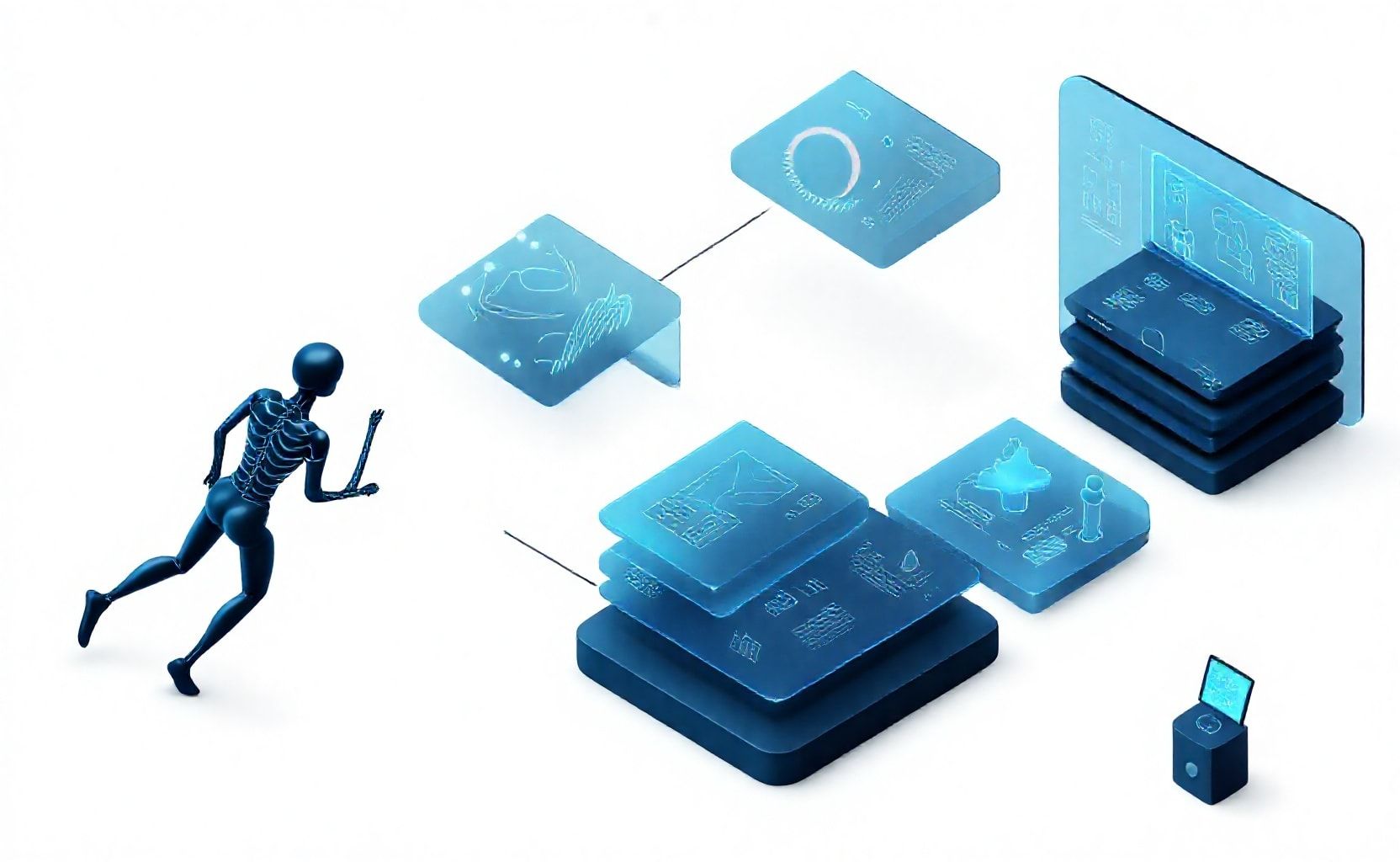
This section lays out a practical, repeatable workflow for using RunwayML to analyze parkour movements and generate AI-powered training documentation. It blends capture discipline, AI-driven analysis, structured annotation, and exportable reports into a central blueprint that scales across sessions. The goal is to turn raw footage into actionable coaching cues, drill sequences, and progress visuals with minimal manual bottlenecks.
By aligning capture, analysis, and documentation in one end-to-end pipeline, teams can accelerate review cycles and maintain consistency across athletes. Recent updates to RunwayML—including Gen-4 capabilities, API access, and enhanced export options—support a tighter loop from video to coaching notes. A data-driven approach, complemented by Merge’s integration paradigm for unified data flows, helps you transform individual clips into a repeatable, scalable documentation framework.
Capture and preprocess: ensure consistent frame rates and camera angles to support analysis
Begin with a standardized capture protocol: fixed-frame-rate recording (ideally 60 to 120 frames per second for parkour moments), stable camera placement, and consistent field of view that keeps the athlete’s full motion envelope in frame. Use a single or mirrored angles to support pose estimation across jumps, landings, and flows. Lighting should be steady to reduce exposure fluctuations that complicate pose tracking. Templates for shot lists, camera positions, and lighting checklists help crews reproduce the same conditions session after session. Research notes emphasize that frame rate and viewing angle influence pose-estimation accuracy, so documenting these factors early minimizes drift in later analyses.
Movement analysis: apply AI-driven analysis (pose/motion cues) to quantify jumps, landings, and flow
Leverage RunwayML’s AI-assisted pose analysis to extract keypoints, trajectories, and motion cues from each clip. Pair a robust pose-estimation model (choices include fast, lightweight options and higher-accuracy alternatives) with motion cues like flight time, takeoff angle, peak height, and landing impact. While some studies compare OpenPose and MediaPipe Pose in terms of accuracy and speed, the practical takeaway is to select a model that maintains reliable tracking for your camera setup and session length. RunwayML’s Gen-4 toolset and the associated API enable you to run these analyses in parallel, then converge results into a single narrative of jumps, landings, and fluency. Emphasize consistent units (e.g., meters or feet for height) and annotate edge cases (partial occlusions, complex flows) to guide subsequent coaching notes.
Annotation and scoring: tag clips with timestamps, cues, and coaching notes for actionable feedback
Annotate with precise timestamps and motion cues alongside coaching notes. AI-assisted annotations can automatically tag segments by jump type, flight duration, contact with the ground, and flow transitions, then attach coaching cues such as “soft landing,” “elbow extension,” or “smooth deceleration.” Templates for coaching notes ensure feedback is scalable across athletes. Use RunwayML to generate cue sheets directly from annotated clips, so reviewers see not only what happened but what to correct in the next drill. This inline annotation approach shortens the cycle from review to practice to measurement, creating a repeatable feedback loop.
Training documentation: auto-generate progress reports, drill sequences, and cue sheets tailored to athletes
Turn annotated data into individualized documentation: progress reports that summarize skill fluency, jump metrics, and landing consistency; drill sequences tailored to each athlete’s gaps; and cue sheets that coaches can hand to athletes as structured practice guides. A central blueprint for metrics and drills supports rapid iteration across sessions and athletes. The documentation can incorporate RunwayML outputs (annotations, motion cues, and AI-generated summaries) to speed up the production of athlete-focused materials. Aligning these artifacts with a data-driven template keeps the content consistent and repeatable.
Progress dashboards: create shareable visuals that track improvement over time
Build dashboards that visualize trajectory over weeks or months: fluency scores, jump height progression, landing impact trends, and flow consistency. Shareable visuals—graphs, heatmaps of cue frequency, and drill sequencing summaries—help athletes and coaches interpret progress at a glance. Best practices from sports analytics emphasize clear storytelling in dashboards: compare baselines to current performance, annotate outliers, and provide quick actions to close gaps. Embedding these visuals in reports or athlete portals makes progress tangible and motivates continued training.
Integration with RunwayML: use AI-assisted annotations and outputs to accelerate review cycles
RunwayML serves as the central engine for AI-assisted annotations and outputs. The platform’s ongoing updates, including Gen-4 enhancements and API access, enable smoother integration into your documentation workflow. Use AI-driven annotations to speed up tagging, automatically generate motion cues, and produce draft coaching notes that a reviewer can refine. Export formats and video-to-video features support fast review cycles: you can push annotated clips, cue sheets, and drill sequences into a coaching package with minimal manual editing. A data-driven blueprint—where RunwayML outputs feed directly into the documentation templates—helps teams scale review across many athletes and sessions. If you’re coordinating multiple tools, Merge’s integration approach is a natural fit for consolidating inputs and outputs into a single, coherent documentation stream.
Section data and research-backed approach
The workflow is grounded in a structured pilot approach: run small, documented pilots to test hypotheses about motion analysis, annotation reliability, and coachable cues. Use data-driven templates to capture metrics, then iterate based on observed gains in consistency and fluency. This section emphasizes a central blueprint to scale movements analytics across sessions, allowing you to push updates quickly and measure impact with comparable datasets. Aligning with Merge’s integration approach for data-driven documentation ensures that every input, annotation, and report flows into a unified data spine, reducing silos and accelerating iterations. Research-informed practices suggest that standardized data schemas and repeatable review cycles boost both reliability and athlete buy-in.
Frequently Asked Questions About RunwayML for Parkour Training Videos

RunwayML is becoming a core tool for lightweight, AI-driven video effects in parkour training footage. It lets practitioners apply motion-aware effects, automated rotoscoping, and style transfers while feeding results into analytics and training docs through APIs or webhooks. With a growing segment of organizations adopting AI in at least one function, teams are increasingly pairing RunwayML with data pipelines to measure impact and iterate quickly. This section translates those trends into practical steps for parkour-specific workflows.
Adoption timelines vary, and ROI/governance benchmarks are still evolving in this space. A pragmatic approach is to start with a blueprint and scale through structured pilots—something many teams find aligns with a 3-month horizon for initial metrics like engagement and NPS targets. In practice, you’ll often see a +5 NPS pilot target within three months, alongside a clear plan to connect generated video outcomes to training progress and performance observations. 101-blueprint guidance and structured pilots inform practical answers.
Q: Which tool works best for parkour video effects and analysis?
Answer: Use RunwayML as the primary editor for AI-driven video effects, then integrate with data pipelines (APIs/webhooks) to feed analytics and training docs. In the field, teams combine RunwayML’s on-device or cloud-based effects with lightweight data layers that capture engagement, drill completion, and observable performance changes. A practical blueprint is to map each effect to a training objective and route metadata into your analytics docs automatically. This blend keeps creativity fast and measurement explicit.
Q: How long does it take to set up?
Answer: Initial setup typically spans days to weeks depending on data sources, desired outputs, and team readiness; expect a pragmatic ramp with a blueprint. A common pattern is to start with a data inventory, define a minimal viable pipeline (one athlete, one gym, a handful of moves), then iterate to add more athletes and moves. A rough timeline: Week 1–2 inventory and goals, Week 2–4 prototype pipelines and prompts, Week 4–6 pilot with 1–2 athletes, then scale. Lean beginnings often yield faster wins and clearer requirements for expansion.
Q: What are common setup issues?
Answer: Ingest formats, asset organization, API keys, credential management, access controls, and versioning of prompts and workflows. Practical fixes include standardizing video formats (e.g., MP4 with consistent frame rates), creating a tagging taxonomy for assets, storing API keys in a secure vault, enforcing role-based access, and keeping prompts and workflow definitions under version control. Planning early around these facets reduces rework during the pilot. Good hygiene here pays off as you scale.
Q: How do you measure ROI and impact?
Answer: Define metrics like engagement, training completeness, and observed performance changes; use a simple ROI calculator concept and tie results to a pilot’s scope. Start with baseline engagement (views, completion rates of drills) and track incremental improvements after each RunwayML effect or analytics integration. Note that ROI benchmarks are a known gap in the research and should be built into your projects from the start. A pragmatic approach is to compute ROI as (Value from outcomes − Cost) / Cost, then translate that into coach and athlete-facing success criteria. In practice, align ROI with a +5 NPS target within the pilot period and document how each effect influences training adherence. The data-backed approach helps teams justify the investment as they learn what moves and effects drive the best results.
Q: How scalable is the pipeline?
Answer: Start with a pilot per athlete or per gym; scale by codifying prompts, prompts templates, and data integrations (APIs/webhooks) as you expand to more moves and athletes. Build modular components: a library of reusable prompts, a small set of data connectors to capture drill outcomes, and a governance layer that keeps access and data handling consistent. As you scale, treat the pipeline like a blueprint: add athletes, moves, and gyms in repeatable, documented steps, and retire older prompts with version control. Scalability comes from disciplined reuse and clear data contracts.
Q: What about governance and privacy?
Answer: Plan for access controls and data governance early; the research highlights governance guidance as an opportunity—build a playbook alongside your pipeline. Implement role-based access, data minimization, and retention policies from day one. Create a lightweight playbook that covers consent, anonymization where feasible (e.g., anonymized performance stats), and audit trails for who accessed what data. Pair this with periodic reviews to adapt to new regulations or team needs. Governance is not a bottleneck when you design it into the workflow.
Contextual data and practical benchmarks can ground these answers. For example, broad industry signals show that 65% of organizations are using AI in at least one function, underscoring a favorable adoption climate for AI-assisted video workflows. In parkour programs, setting a measurable pilot target such as a +5 NPS improvement within three months helps anchor the initiative in user sentiment. Finally, while ROI and governance benchmarks are still developing in the research, treating them as living parts of the pilot—with a 101-blueprint approach—helps teams translate AI capabilities into tangible training outcomes.
Tools, platforms, and integration methods for this workflow
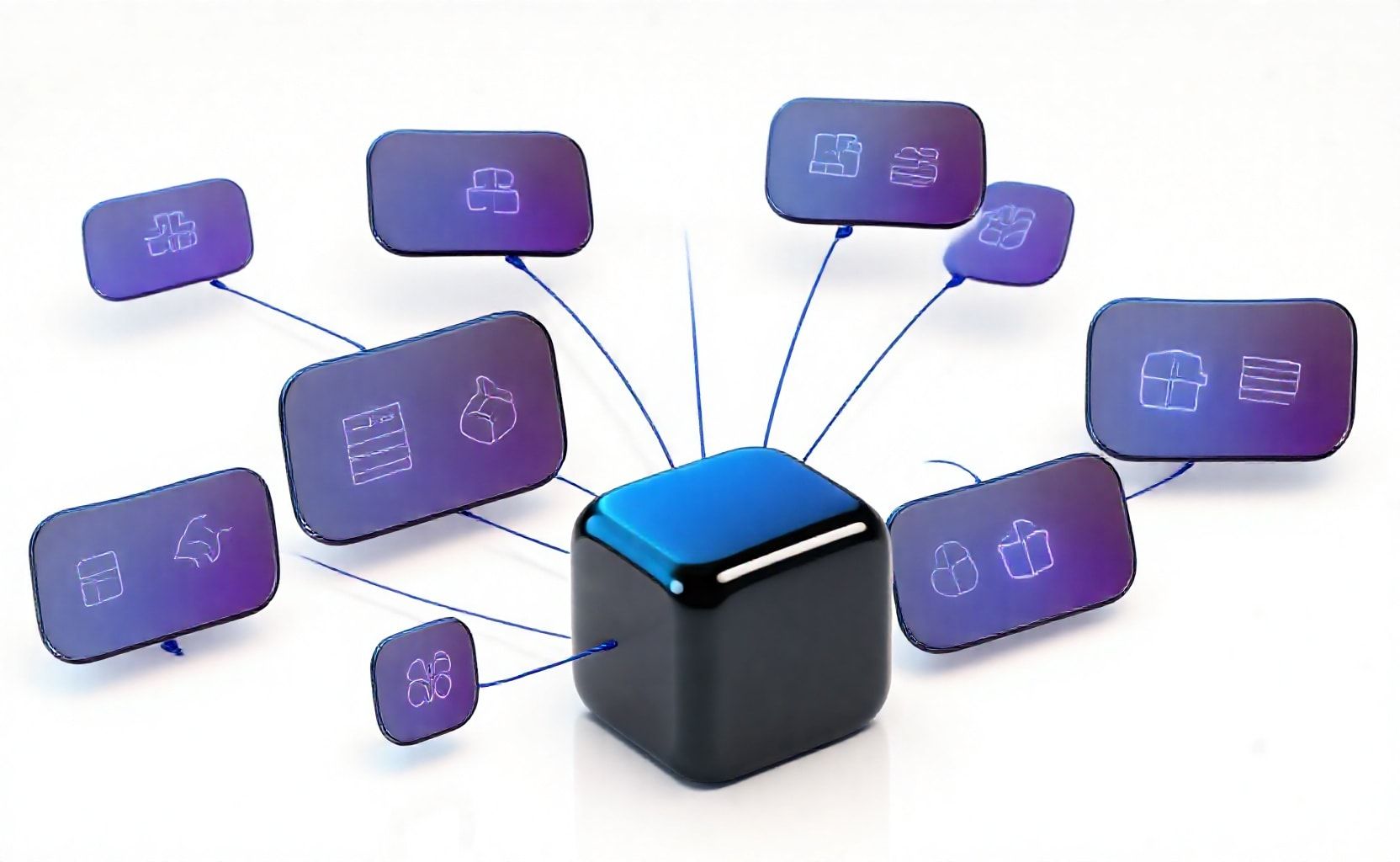
In a RunwayML-driven parkour training video workflow, RunwayML sits at the center as the AI video editor that stitches motion, environment, and timing into cohesive sequences. The editor’s Gen-4/Turbo capabilities and webhook-ready API surface enable rapid iterations on stunts, speed ramps, and situational effects, which is essential when you’re syncing action with coaching cues and on-screen text. The broader data fabric matters just as much: Merge’s unified API unlocks 220+ integrations across six software categories, letting you connect asset libraries, analytics, and localization pipelines without tree‑trimming complexity.
To scale and localize content for athletes and audiences worldwide, you’ll lean on the 101-blueprint guide and the AI-pilot ecosystem, which maps 11 industry groups and 6 agent types to practical patterns. This section outlines concrete tools, platforms, and integration methods that keep RunwayML projects predictable, observable, and adaptable to localization and accessibility requirements.
Tool landscape, core integration patterns, and data connectivity
RunwayML remains the central editing workstation, while Merge provides the connective tissue to pull in assets, profiles, and data from a wide ecosystem. Use the Merge Unified API to normalize and route data into RunwayML projects via webhooks and API calls, so your edits reflect up-to-the-minute inputs from motion capture feeds, asset stores, or feedback loops. The Google Cloud Next 25 showcase reinforces how enterprise AI toolchains are evolving to support end‑to‑end video workflows, from data ingest to deployment, which aligns with a parkour pipeline that must scale across teams and locales. The 11 industry groups and 6 agent types from the AI‑pilot framework help you design structured pilots and guardrails for editing requests and feedback loops.
Data & assets
The 101-blueprint guide and the AI-pilot ecosystem provide a concrete map for shaping RunwayML-powered workflows. You can align your asset pipelines and prompts with 11 industry groups and 6 agent types to standardize how edits are requested, validated, and implemented. Use this mapping to orchestrate motion capture data, background plates, and synchronized coaching cues without bottlenecks.
Consistency across assets and prompts helps reduce drift between training cues and on-screen edits, which is critical when a parkour sequence transitions from indoor to outdoor environments.
Global content capabilities and localization strategy
Synthesia’s 230+ avatars in 140+ languages serve as a reference for localization and accessibility strategies within the RunwayML workflow. Use avatars to prototype coach-led narration in multiple languages, generate region-specific overlays, and create multilingual captions that stay synchronized with edits. This capability supports broader audience reach and inclusive training content, without sacrificing the precision of timing and motion required for parkour shots.
In practice, you can precompute language-specific prompts and reuse them across scenes, then swap avatar delivery in RunwayML outputs during the final render, keeping the action coherent while expanding reach.
Integration plan: data sources, APIs, and observability
Map data sources to a RunwayML project using a lightweight integration layer that pulls in motion data, asset metadata, and localization assets via APIs and webhooks. Establish a simple observability layer that tracks edits, frame-level changes, and final outputs with lightweight telemetry (success/failure, processing time, data lineage). This makes it easier to audit edits and roll back if needed, which is valuable when iterating on stunt sequences or coaching cues.
Implementation patterns: prompts, pilots, and feedback loops
Adopt Retrieval-Augmented Generation (RAG)-powered prompts and structured pilots to manage editing requests. Use modular pilots for different stages—scene setup, motion edits, color and grain adjustments, and localization pass. Each pilot can accept feedback in a loop, triggering targeted edits in RunwayML via webhooks and API calls, so the team quickly converges on the final cut.
Across a parkour video program, this approach keeps edits repeatable, auditable, and scalable as you add new athletes or environments.
Troubleshooting and governance
Common friction points include format compatibility, access controls, and data integrity across chained tools. Build governance playbooks that outline data retention rules, versioning conventions, and access policies for RunwayML projects, Merge integrations, and localization assets. Establish a simple change-log process and a rollback plan to minimize risk when iterations collide with timing windows on a stunt beat or coaching cue.
ROI, governance, and adoption considerations

In the realm of parkour training videos powered by RunwayML, framing value beyond novelty is essential. A pragmatic ROI mindset means translating video effects, performance analysis, and coaching accelerations into measurable outcomes. By tying creative capability to training outcomes, engagement signals, and cost efficiencies, teams can build a defensible case for broader adoption while keeping pilots lightweight and iteratively improvements transparent.
Recent market momentum highlights a broad opportunity: organizations are accelerating AI adoption, with a substantial share of teams beginning or expanding GenAI programs. For Runway-enabled workflows in athletic training, the path to scale hinges on a lightweight, accountable ROI model, rigorous governance, and a clear adoption cadence that ties to real-world improvements such as instructor feedback loops, student uptake, and the quality of on-screen demonstrations. Runway’s evolving toolset, including Gen-4 capabilities that maintain consistent character rendering across varying lighting and environments, supports repeatable, audit-friendly training videos that are easier to compare over time. Pilot clarity and governance discipline help ensure that gains are measurable rather than episodic.
ROI framework and lightweight calculator
Define a concise framework around four value drivers: video engagement, training outcomes, lead/conversion signals, and cost savings. Treat the ROI as a rolling scorecard that you can recompute at the end of each pilot window. Start with a rough calculator: ROI estimate = (engagement value + training-value + lead-value + cost-savings) − pilot costs. This keeps you honest about inputs and transparent to stakeholders.
Actionable steps to implement now:
- Align metrics with coaching goals (e.g., time-to-proficiency, move accuracy, and retention of technique).
- Track lightweight engagement signals (watch duration, replays of key sequences, and segment completion).
- Capture training outcomes (improvement in target moves, cue-response accuracy, and qualitative coach feedback).
- Quantify cost savings (reduced in-person coaching hours, faster iteration cycles, and streamlined video review).
Below is a compact ROI reference to help structure your pilot discussions. It remains a framework for discussion rather than a fixed standard, acknowledging that end-to-end ROI benchmarks in this domain are still a known research gap.
Governance and privacy
Establish access controls, data handling policies, and security practices up front. Create a lightweight governance playbook that aligns with pilot goals and risk management needs. This means defining who can upload footage, who can modify prompts, and how outputs are stored alongside raw inputs.
Core components to implement early:
- Role-based access with least-privilege permissions for data and models
- Data handling policies including retention, anonymization, and deletion schedules
- Security practices such as encryption, audit logging, and regular reviews
- A governance playbook that connects pilot objectives to data inputs/outputs, risk registers, and escalation paths
The governance approach should mirror the pilot’s scope, ensuring that what you measure in the lab translates to trusted production use cases. A clear framework helps teams scale with confidence and reduces friction during expansion.
Adoption strategy
Leverage the 65% AI-adoption benchmark to calibrate expectations and pace. Plan for measurable improvements in adoptive metrics such as Net Promoter Score (NPS) and training uptake within a defined pilot window. The goal is not only to demonstrate capability but to show how Runway-enabled videos change learner engagement and outcomes in tangible ways.
- Secure cross-functional sponsorship from coaching, performance, and ops leads
- Define a 6–12 week pilot window with explicit success criteria
- Track adoption signals (participation rates, feedback frequency, and content utilization)
- Iterate prompts and workflows based on coach and athlete feedback
Scale considerations
Codify prompts, data schemas, and integration patterns to enable multi-athlete and multi-move rollouts. Build a modular prompt library that covers common parkour moves, lighting conditions, and camera angles. Align data schemas with your LMS or coaching platform to ensure consistent metadata tagging and searchable outputs. Plan for interoperability with Runway updates that improve stability across environments.
- Standardized prompts and templates for common moves
- Defined data schemas for inputs, outputs, and provenance
- API and integration patterns that support batch processing and multi-athlete projects
- Governance guardrails that scale with usage and new moves
Pilot-to-production path
Start with a small, documented pilot that records the objective, data inputs, outputs, and ROI estimate, then broaden step by step. A concise pilot plan should specify the target move set, athlete cohort, video formats, and evaluation criteria. Use the pilot results to refine the ROI model, governance playbook, and adoption plan before expanding to larger groups or additional moves.
- Define objective and success metrics; collect baseline data
- Document data inputs, outputs, prompts, and model versions
- Estimate ROI and capture lessons learned in a lightweight ROI log
- Expand to additional athletes and moves in iterative waves
Conclusion
You can turn parkour footage into a repeatable, data-backed pipeline that accelerates coaching, documentation, and marketing. Ground your RunwayML edits in a structured pilot and tap the broader AI ecosystem (APIs, webhooks, multi-language support, blueprint-driven setup) to create measurable impact.
- Pilot-first objectives, data inputs, and success metrics.
- Blueprint-driven workflows for coaching, docs, and marketing.
- ROI-focused scaling across moves and athletes.
Start with a 2-week pilot: define objective, map data inputs, and set up a RunwayML project with a blueprint. Then scale across moves and athletes, using the ROI framework to quantify value. Turn edits into outcomes you can measure and act on.